COVID on the Breadline documentary – 7 min and 30 min versions in one place

Documentary showing the reality of lockdown for the world’s poor

7 min version (low res, suitable for whatsapp etc)

COVID on the Breadline. Short version from PICTURING HEALTH on Vimeo.

30 min version

COVID on the Breadline from PICTURING HEALTH on Vimeo.

No lockdown in Sweden but Stockholm could see ‘herd immunity’ in weeks

https://www.cnbc.com/2020/04/22/no-lockdown-in-sweden-but-stockholm-could-see-herd-immunity-in-weeks.html

For me the most striking point is that measures other countries are adopting as they ease restrictions look rather like what Sweden has been doing. South Africa is going to “Level 4” but the rationale is not apparent from the death rate or infection rate, which both continue to curve upward. I think there is a lot of tacit admission of failure going on in places where a lockdown should have been more carefully considered.

If you’ve never been to an African hospital, please watch just a few seconds of this (not graphic/gruesome, just informative) #epitwitter

Thanzi la Onse (Health of All) from PICTURING HEALTH on Vimeo.

This is a film someone sent me about allocating resources in Malawi’s main hospital, and by extension, in all low resource settings. It’s interesting in itself but I think just the images are worth seeing if you’re from the West/North and have a Western/Northern image of a hospital. It’s not gruesome or graphic: it’s just striking how small and informal everything looks. Watch a bit more and you’ll get a flavor of both the shortages, and the way that allocation works – competition, persuasion, patching budgets together. It gives you a flavour of the sub-Saharan context of operation. The lack of basic equipment such as ventilators is of course shocking. (If you aren’t aware, the ICU unit is fundamentally built around the mechanical ventilator.) It’s eye-opening. You’ll see what I mean…

“Lockdown is a luxury” – Online Covid-19 Conversation #1, 25 April, Atlantic Fellows for Social and Economic Equity

https://afsee.atlanticfellows.org/events/lockdown-is-a-luxury

25 April 14:00 UTC / 15:00 London / 16:00 Johannesburg / 17:00 Nairobi / 19:30 New Delhi / 19:45 Kathmandu

Registration: https://us02web.zoom.us/meeting/register/upwrfu2pqz4tH9ZCBpKzvlXj4keyGefn5vlJ

Join the first of Atlantic Fellows for Social and Economic Equity’s online conversations that look towards a new social and economic future after the COVID-19 pandemic. “Lockdown is a Luxury” will be led by Fellows living and working in Asia and Africa. Saida Ali, Tracy Jooste, Appu Suresh and Kripa Basnyat will share first-hand experiences and insights on the pandemic and its current and long-term impacts.

A third of the world’s population — some 2.6 billion people — are now under varying degrees of lockdown in the wake of the coronavirus pandemic. For those who have the privilege of withdrawing into comfortable isolation, who can work from home and who have enough money to weather the storm, lockdown and social distancing are effective options. But what about the poor, who make up the majority of the world’s population and who are already facing social and economic inequalities? Is the worldwide WHO-approved lockdown an unaffordable luxury?  

From street vendors to house cleaners, sex workers to migrant labourers, daily wage workers everywhere are struggling with immediate and often complete losses of income and the impracticality of following measures such as lockdowns and social distancing. Those living in dense, low-income informal settlements in countries such as Kenya, India, Bangladesh, South Africa and Brazil have seen limited access to water and sanitation restricted further still. Around the world, cases of domestic violence and sexual abuse are rising. “Flattening the curve” is a distant goal, but hunger and poverty are here now.  

In India, nearly 400 million migrant workers’ lives have been upended. As places of work close down, as states shut borders and halt transportation, and as workers run out of cash, they have no choice but to walk hundreds of miles back home. In Kenya, rural widows are working and walking longer hours for fewer shillings to put food on the table: the struggle now is not for social justice or gender equity, but survival. For millions of Africans, coronavirus and the responses of states and governments have only exacerbated poverty and powerlessness.  

What does today look like on the ground in Asia and Africa? What will tomorrow bring? Atlantic Fellows for Social and Economic Equity — activists, policy-makers, practitioners and movement-builders from around the world — offer their insights.

Speakers: Saida Ali, Kripa Basnyat, Tracy Jooste, Appu Suresh
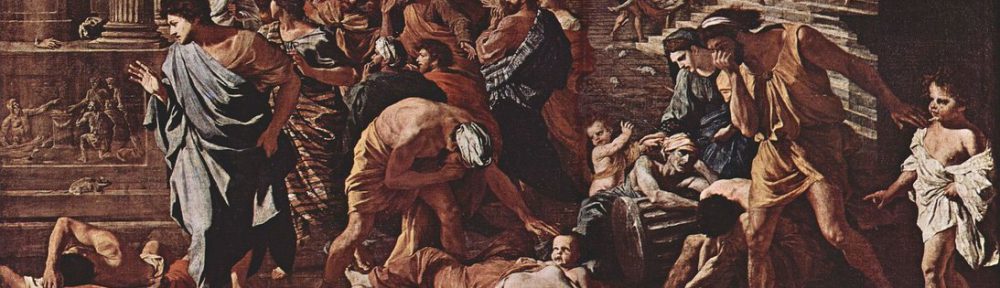
COVID on the Breadline

The Institute for the Future of Knowledge at the University of Johannesburg has partnered with Picturing Health to make a short documentary depicting the impact of severe lockdown measures on those living in poverty in the developing world.

COVID on the Breadline from PICTURING HEALTH on Vimeo.

Continue reading

Predicting Pandemics: Lessons from (and for) COVID-19

This is a live online discussion between Jonathan Fuller and Alex Broadbent, hosted by the Institute for the Future of Knowledge in partnership with the Library of the University of Johannesburg. Comments and discussion are hosted on this page, and you can watch the broadcast here:

We know considerably more about COVID-19 than anyone has previously known about a pandemic of a new disease. Yet we are uncertain about what to do. Even where it appears obvious that strategies have worked or failed, it will take some time to establish that the observed trends are fully or even partly explained by anything we did or didn’t do. And when we take a lesson from one place and try to apply it in another, we have to contend with the huge differences between different places in the world, especially age and wealth. This conversation explores these difficulties, in the hope of improving our response to the uncertainty that always accompanies pandemics, our ability to tell what works, our sensitivity to context, and thus our collective ability to arrive at considered decisions with clearly identified goals and a based on a comprehensive assessment of the relevant costs, benefits, risks, and other factors.

Further reading:

Professor Alex Broadbent (PhD) is Director of the Institute for the Future of Knowledge at the University of Johannesburg and Professor of Philosophy at the University of Johannesburg. He specialises in prediction, causal inference, and explanation, especially in epidemiology and medicine. He publishes in major journals in philosophy, epidemiology, medicine and law, and his books include the path-breaking Philosophy of Epidemiology (Palgrave 2013) and Philosophy of Medicine (Oxford University Press 2019).

Dr Jonathan Fuller (PhD, MD) is a philosopher working in philosophy of science, especially philosophy of medicine. He is an Assistant Professor in the Department of History and Philosophy of Science (HPS) at the University of Pittsburgh, and a Research Associate with the University of Johannesburg. He is also on the International Philosophy of Medicine Roundtable Scientific Committee. He was previously a postdoctoral research fellow in the Institute for the History and Philosophy of Science at the University of Toronto.

Thinking rationally about Coronavirus

I have written an op ed which can be found here:

https://www.who.int/emergencies/diseases/novel-coronavirus-2019/technical-guidance/country-readiness

There is also a very good (in my opinion) peace in the Lancet which emphasizes the importance of rate of spread and anticipates public health measures as an inevitability, better embraced sooner than later.

https://doi.org/10.1016/ S0140-6736(20)30567-5

Events like this really make me feel that epidemiology must be much more widely understood in the contemporary world. Debates about red meat do the same, but less dramatically. This is such a stark case. Epidemiological expertise must guide us and basic comprehension of epidemiology – even as basic as just knowing that there is such a thing and that there are Experts in it, and that they are not necessarily doctors – would help so much. Politicians aren’t better educated than the rest of the educated public. I’m not critiquing any particular decision – so far, things have mostly been sensible, I think – but the sense of not knowing could be greatly alleviated. How about just a short module on epidemiology as part of high school biology?…