https://www.pressreader.com/south-africa/the-sunday-independent/20200419/281814286000353
Benjamin Smart @bthsmart in the Sunday Independent (SA): ‘Hunger, SA’s worst threat’
Reply
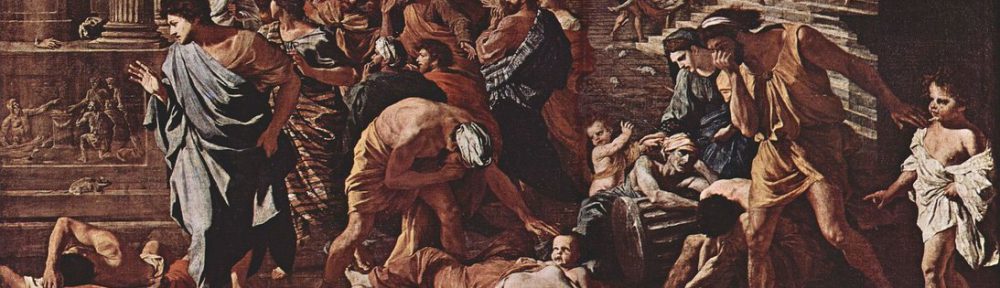
Continent has limited confirmed virus fatalities but experts warn it is too early to draw conclusions
— Read on www.ft.com/content/e9cf5ed0-a590-4bd6-8c00-b41d0c4ae6e0
Some of us have been suggesting for some time that the risk profile of Africa may differ from that of other regions. It is too early to draw firm conclusions but there is good reason to seek a stronger evidence base for extreme lockdown measures given their cost.
Preventive medicine and public health expert Dr David Katz on Real Time with Bill Maher: https://youtu.be/Lze-rMYLf2E
Also shares interesting views about his experiences as a volunteer physician in Bronx hospitals
https://worldisraelnews.com/back-to-school-australian-study-suggests-kids-arent-corona-spreaders/
Interesting that the retort from another academic, criticising the study, also included this: “Is this the work of some politician somewhere who doesn’t like their own kids and don’t want them at home? I don’t know.” Well, obviously she doesn’t know, because it’s a rhetorical question she made up to add rhetorical force to her (perfectly reasonable) critique, and to personally attack the authors of the study by suggesting they are politically motivated. Scientists should leave this sort of junk to the politicians, except where they actually do know.
And you have to ask what would have happened if there had been no filming.
For me the most striking point is that measures other countries are adopting as they ease restrictions look rather like what Sweden has been doing. South Africa is going to “Level 4” but the rationale is not apparent from the death rate or infection rate, which both continue to curve upward. I think there is a lot of tacit admission of failure going on in places where a lockdown should have been more carefully considered.
https://afsee.atlanticfellows.org/events/lockdown-is-a-luxury
25 April 14:00 UTC / 15:00 London / 16:00 Johannesburg / 17:00 Nairobi / 19:30 New Delhi / 19:45 Kathmandu
Registration: https://us02web.zoom.us/meeting/register/upwrfu2pqz4tH9ZCBpKzvlXj4keyGefn5vlJ
Join the first of Atlantic Fellows for Social and Economic Equity’s online conversations that look towards a new social and economic future after the COVID-19 pandemic. “Lockdown is a Luxury” will be led by Fellows living and working in Asia and Africa. Saida Ali, Tracy Jooste, Appu Suresh and Kripa Basnyat will share first-hand experiences and insights on the pandemic and its current and long-term impacts.
A third of the world’s population — some 2.6 billion people — are now under varying degrees of lockdown in the wake of the coronavirus pandemic. For those who have the privilege of withdrawing into comfortable isolation, who can work from home and who have enough money to weather the storm, lockdown and social distancing are effective options. But what about the poor, who make up the majority of the world’s population and who are already facing social and economic inequalities? Is the worldwide WHO-approved lockdown an unaffordable luxury?
From street vendors to house cleaners, sex workers to migrant labourers, daily wage workers everywhere are struggling with immediate and often complete losses of income and the impracticality of following measures such as lockdowns and social distancing. Those living in dense, low-income informal settlements in countries such as Kenya, India, Bangladesh, South Africa and Brazil have seen limited access to water and sanitation restricted further still. Around the world, cases of domestic violence and sexual abuse are rising. “Flattening the curve” is a distant goal, but hunger and poverty are here now.
In India, nearly 400 million migrant workers’ lives have been upended. As places of work close down, as states shut borders and halt transportation, and as workers run out of cash, they have no choice but to walk hundreds of miles back home. In Kenya, rural widows are working and walking longer hours for fewer shillings to put food on the table: the struggle now is not for social justice or gender equity, but survival. For millions of Africans, coronavirus and the responses of states and governments have only exacerbated poverty and powerlessness.
What does today look like on the ground in Asia and Africa? What will tomorrow bring? Atlantic Fellows for Social and Economic Equity — activists, policy-makers, practitioners and movement-builders from around the world — offer their insights.
Speakers: Saida Ali, Kripa Basnyat, Tracy Jooste, Appu Suresh
 CPEMPH