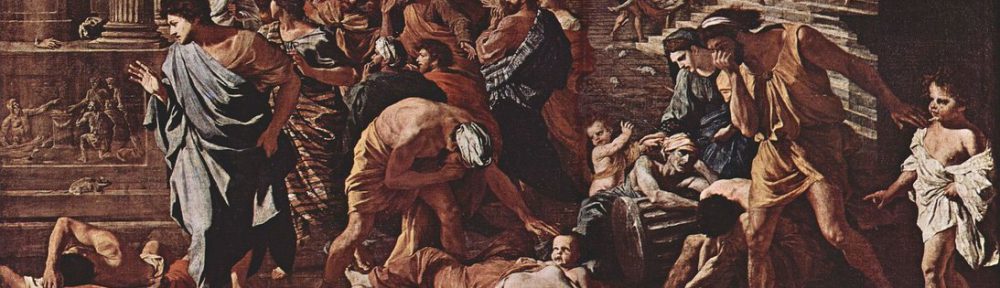
Announcing ‘The Philosophy of Public Health’ by Benjamin Smart

It is a delight to share the publication of The Philosophy of Public Health by CPEMPH co-Director, Professor Benjamin Smart of the University of Johannesburg. This is an important and timely book which exemplifies the best of applied philosophical thinking: it identifies deep conceptual problems that arise in real-world contexts, and uses rigorous philosophical tools to reach conclusions that can guide public health practice.

At its core, the book develops a powerful account of health as a property of complex systems. Rather than treating health as a feature of isolated organs or discrete individuals, Ben argues that health is an emergent, capacities-dependent property instantiated at multiple biological and social levels: cells, organs, organisms, and—crucially—populations. This move allows him to dissolve familiar puzzles about “population health” and to provide a framework that aligns far more closely with what public health professionals actually confront.

A second major contribution concerns the goal of public health. Ben rejects the simplistic idea that public health should merely raise aggregated individual health scores, noting that such metrics neglect inequality, autonomy, and the broader social determinants of health. Instead, he argues that public health should aim to increase the capacities that matter for individuals’ ability to realise the goods of life—capacities that range from access to clean water and functioning healthcare systems, to education, mobility, and the structural conditions required for dignified living.

The book also provides a philosophically grounded defence of Evidence-Based Public Health that is sensitive to context, values, and the limitations of traditional hierarchies of evidence. Ben engages seriously with recent failures in global pandemic response, arguing for a more nuanced and context-aware understanding of what it means to “follow the science”.

In the final chapters, he turns to ethics and the question of decolonising public health, offering a principled but pragmatic framework for navigating public health decision-making across profoundly unequal societies. Throughout, the book is shaped by his decade of experience living and working in South Africa, but its arguments travel far beyond this context.

The result is a work that will influence both philosophers and practitioners. It is a rare example of philosophy that is simultaneously conceptually rigorous, policy-relevant, and deeply humane. I could not be more pleased to see it in print, and I recommend it warmly to anyone working in public health, philosophy of medicine, or the conceptual foundations of health policy.

Congratulations, Ben. 

Philosophy of Medicine Reading Group, October-December 2025

The International Philosophy of Medicine Reading Group is now well into its third season. The group is truly international and interdisciplinary (yes, there are medical doctors and philosophers!), with participants from different research backgrounds and at different career stages. Like last Spring, we are not working through a single monograph, but reading and discussing a variety of recent papers.

You can choose to join either the Wednesday meeting, 5pm UK time, or the Thursday meeting, 10.05am UK time, depending on what works best for you and your time zone. Feel free to drop into the sessions whenever you can — there is no commitment to attend the whole series.

Here’s the calendar.

  • Week 1 Weds 22 Oct, Thurs 23 Oct
    Maung, H. H. (2025). The Disunity of Disease. Philosophy of Medicine, 6(1).
  • Week 2 Weds 29 Oct, Thurs 30 Oct
    Larcher, Vic. (2025) Children are not small adults: Significance of biological and cognitive development in medical practice. Handbook of the philosophy of medicine. Dordrecht: Springer Netherlands, 2025. 435-457.
  • Week 3 Weds 5 Nov, Thurs 6 Nov
    Hucklenbroich, Peter (2025) Medical theory and its notions of definition and explanation. Handbook of the Philosophy of Medicine. Dordrecht: Springer Netherlands, 2025. 1041-1049.
  • Week 4 Weds 12 Nov, Thurs 13 Nov
    Wiggleton-Little J. (2025) Pain Dismissal and the Limits of Epistemic Injustice. Hypatia. Published online 2025:1-17.
  • Week 5 Weds 19 Nov, Thurs 20 Nov
    De Marco, Gabriel, et al. “What makes a medical intervention invasive?.” Journal of medical ethics 50.4 (2024): 226-233.
  • Week 6 Weds 26 Nov, Thurs 27 Nov
    Brock, Dan, ‘Quality of Life Measures in Health Care and Medical Ethics’, in Martha Nussbaum, and Amartya Sen (eds), The Quality of Life (Oxford, 1993; online edn, Oxford Academic, 1 Nov. 2003)
  • Week 7 Weds 3 Dec, Thurs 4 Dec
  • Al-Juhany, A. (2025). Why We Should Not Characterize Aging as a Disease. Philosophy of Medicine6(1). 
  • Week 8 Weds 10 Dec , Thurs 11 Dec
  • Glackin, S. (2025). Externalist Medicine and Externalist Biology. Philosophy of Medicine6(1).

We meet on Teams. If you would like to receive weekly reminders, email Sarah Wietens and join the Google group (if you haven’t already).

The Oxford Handbook of Philosophy of Medicine

We’re delighted that the Oxford Handbook of Philosophy of Medicine has been published, the result of the efforts of over 30 philosophers from all over the world. The Handbook brings together leading thinkers to chart the evolving relationship between philosophy and medicine. Edited by Alex Broadbent, the volume examines core philosophical questions about health, truth, and evidence, alongside contemporary challenges including social justice, gender, race, and the ethics of artificial intelligence.

The handbook highlights the cultural diversity of medical traditions and the opportunities this creates for a richer philosophy of medicine. Many contributors advocate reform within both philosophy and medicine, seeking to make each more responsive, humane, and self-aware. In doing so, the collection exemplifies one of CPEMPH’s guiding ideas: that reflection on medicine can and should change both medicine and philosophy for the better.